 English
 Russian
 French
 Spanish
 Portuguese
 Arabic
 Vietnamese
 Turkish
Alloy
A high-tech enterprise focusing on the development and application of X-ray technology products, committed to becoming a leading supplier of X-ray industrial testing solutions.
Navigating Your Portable XRF Analyzer Purchase: A Guide to Key Specifications
Making a decision about acquiring a portable XRF analyzer is a significant step for any professional in fields ranging from scrap metal sorting to environmental site assessment. While the focus often starts on the investment, the most critical determinant of long-term satisfaction and success lies not in the initial figure, but in how well the instrument's technical capabilities align with your specific needs.
This guide shifts the conversation from cost to capability, walking you through the key specifications that truly matter. By understanding these factors, you can make an informed choice that delivers maximum operational value.
1. The "X" in XRF: Understanding X-Ray Tube vs. Radioisotope Source
This is a foundational choice that affects performance, regulatory handling, and application scope.
X-Ray Tube Systems: These are the most common in modern analyzers. They generate X-rays electronically and offer significant advantages: they can be tuned or optimized for specific elements, provide generally higher intensity (leading to faster analysis), and have no radioactive decay over time. Their use involves less stringent regulatory paperwork in many regions.
Radioisotope Source (Isotopic) Systems: These use a small, sealed radioactive source (like Cd-109). They can be excellent for specific, dedicated applications (e.g., measuring coating thicknesses) and require minimal power. However, they come with strict licensing, handling, transportation, and disposal regulations that must be managed for the life of the source.
Key Question: Does your workflow and company policy support the handling of isotopic sources, or is the flexibility and tunability of an X-ray tube a better fit?
2. The Detector: The Heart of Sensitivity and Resolution
The detector captures the fluorescent X-rays from your sample. Its type dictates what you can detect and how well.
Silicon Drift Detector (SDD): The current industry standard for most applications. SDDs offer very high resolution (the ability to distinguish between closely spaced elemental peaks) and incredibly fast processing speeds. This allows for rapid, precise analysis, especially critical for light elements and complex alloy identification.
PIN Diode Detector: An older technology still found in some entry-level or dedicated-use tools. PIN detectors are robust but have lower resolution and slower count rates than SDDs. They may struggle with complex material mixes or light elements but can be cost-effective for simple, high-concentration tasks.
Key Question: Do your applications require fast, precise analysis of complex materials or light elements (like Mg, Al, Si, P, S), or is your need focused on heavier, pre-defined alloys?
3. Elemental Range: What Can You Actually Measure?
Not all analyzers are created equal in what they can detect.
Light Element Performance (Mg to Ca): The ability to accurately measure elements like magnesium, aluminum, silicon, phosphorus, and sulfur is technically challenging but crucial for many applications. It's essential for positive material identification (PMI) of aluminum and stainless-steel alloys, mining (for Mg in talc, Si in bauxite), and soil contaminant analysis. This capability often requires a premium analyzer with a high-performance SDD, helium purge, or vacuum system.
Standard Range (Ti to U): Most analyzers excel at measuring elements from titanium upward on the periodic table. This covers the vast majority of metals mining, precious metals, heavy metal contaminants, and standard alloying elements.
Key Question: Is the precise quantification of light elements mission-critical for your work, or is your focus on mid-to-heavy elements?
4. Environmental Ruggedness and Form Factor
A portable analyzer must survive its environment.
IP Rating: Look for an Ingress Protection rating (e.g., IP54 or IP65). This certifies the unit's resistance to dust and water. A higher rating is essential for use in dusty mines, at rainy scrap yards, or in humid environments.
Weight & Ergonomics: Operators may hold the device for hours. Consider its weight, balance, and grip design. A lightweight, well-balanced analyzer reduces user fatigue and increases productivity.
Key Question: Will the analyzer be used in a controlled lab-like setting, or does it need to withstand the rigors of a plant floor, mine site, or field environment?
5. Software and Usability: From Measurement to Insight
The hardware is only half the story. The software turns raw data into actionable decisions.
Intuitive Interface: Can operators learn it quickly? Is the screen visible in direct sunlight?
Application-Specific Modes: Does it have pre-calibrated, optimized modes for your industry (e.g., "Alloy," "Soil," "Mining," "Consumer Goods")?
Data Management: How does it store, organize, and export data? Seamless transfer to PCs, cloud services, or LIMS systems is vital for record-keeping and reporting.
Connectivity: Features like GPS for geotagging samples, Bluetooth for wireless printing, and Wi-Fi for data transfer can dramatically streamline workflows.
Key Question: Does the software simplify and accelerate the workflow from measurement to final report, minimizing the chance for user error?
6. Support and Calibration Ecosystem
Your relationship with the manufacturer begins after purchase.
Manufacturer Support: What is the reputation and availability of their technical support, application specialists, and service network?
Calibration & Verification: How easy is it to perform routine calibration checks with certified reference materials? Is the process straightforward for the user?
Updates: Does the company provide regular software updates that add new features or improve performance?
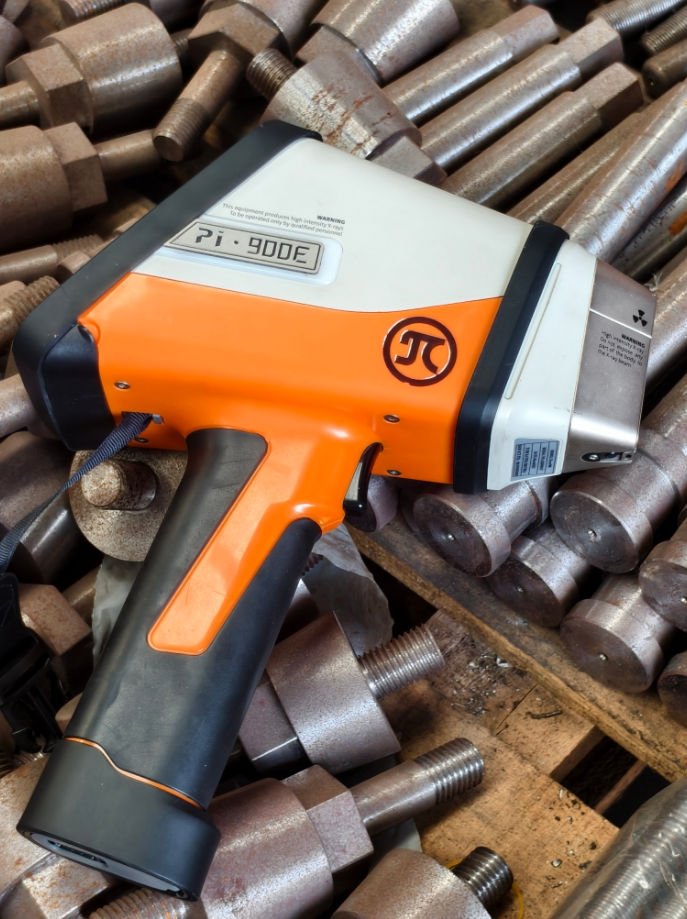
Terras Pi900E Handheld Alloy Analyzer
The Pi900E Portable Alloy Analyzer delivers accuracy, efficiency, convenience, and cost-effectiveness in one integrated solution. Designed for professionals across a range of industries, it utilizes advanced XRF technology to deliver precise, real-time elemental analysis—from potassium (K) to uranium (U). Lightweight, rugged, and user-friendly, it features Wi-Fi connectivity and multi-application calibration. Whether for scrap metal sorting, in-field quality control, or laboratory-grade analysis, the Pi 900E provides a reliable solution for on-site and in-lab testing.
By focusing on these key specifications and aligning them with your clear operational requirements, you can navigate past the initial investment conversation and select the portable XRF analyzer that will become a reliable, productive, and valuable asset for your team for years to come. The right tool isn't the least expensive one—it's the one that solves your problems most effectively.
About Terra Scientific
Terra Scientific is a high-tech manufacturer specializing in the development and application of X-ray technology products. We are committed to becoming a world-class provider of X-ray industrial inspection solutions. Terra Scientific currently offers a range of products to global customers, including handheld alloy analyzer, handheld precious metal analyzer, handheld mining analyzer, benchtop precious metal analyzers, in-line analyzer, and spectrometer modules, along with XRF analyzers. We continuously serve global clients in fields such as mechanical manufacturing, metal processing, aerospace, petrochemicals, mining and geology, food safety, environmental protection, and scientific research.
To learn more, please don't hesitate to contact us via email at sales@terra-scientific.com, or visit our website at http://www.terra-scientific.com
Join Us
Subscribe to our email list for updates & promotions.